Hearing Aids Help Quiet Chronic “Ringing in the Ears” (Tinnitus), New Study Finds

Washington, DC, November 29, 2011 — Nearly thirty million Americans—almost twice as many as previously believed—suffer from persistent, chronic tinnitus, according to a new study by the Better Hearing Institute (BHI). That’s about ten percent of the U.S. population. And for people ages 65 to 84, that number jumps to almost 27 percent. Notably, the study also found that many  tinnitus sufferers reported that their hearing aids  significantly helped them with their tinnitus.

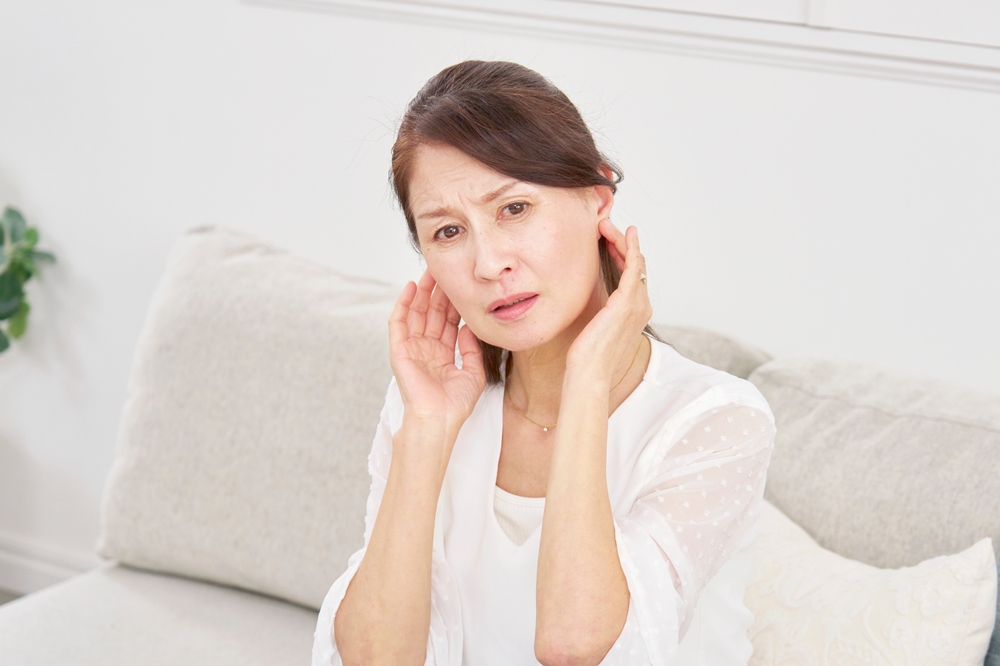
For many who suffer from it, tinnitus can be a source of endless torment and a continual drain on quality-of-life. Often referred to as “ringing in the ears,” tinnitus is the perception of a sound that has no external source. Tinnitus sufferers commonly describe the noise as a ringing, humming, buzzing, and/or cricket-like. Tinnitus can be constant or intermittent. And it can be heard in one ear, both ears, or in the head.

According to the BHI study, four in ten people experience their tinnitus more than 80 percent of the time; slightly more than one in four describe their tinnitus as loud; and about one in five describe their tinnitus as disabling or nearly disabling. Tinnitus is now the number one service-connected disability of returning military personnel from Iraq and Afghanistan. There currently is no known cure for tinnitus.

“The good news is there are effective therapies available to help people cope,” said Sergei Kochkin, PhD, BHI’s Executive Director and co-author of the study. “In particular, we found that a variety of sound  therapies and/or hearing aids in conjunction with counseling can help. In fact, 43.5 percent of survey respondents with tinnitus were helped at least mildly with hearing aids. And 3 out of 10 were helped moderately-to-substantially. For those whose audiologists used best practices in fitting hearing aids, that figure jumped to 50 percent.”

According to the study, people with tinnitus report that it most often affects their ability to hear (39%), concentrate (26%), and sleep (20%). Yet for many, tinnitus is even more pervasive. Twelve percent of respondents—or 3.6 million people when extrapolated to the general population—say their tinnitus affects leisure activities, social life, personal relationships, and emotional or mental health. Seven percent of respondents—or an estimated 2.1 million people nationwide—indicate that tinnitus affects their ability to work.

“Persistent, chronic tinnitus is a highly intrusive, increasingly common condition that can interfere with a person’s cognition, ability to interact with family and friends, and basic life functions,” said Jennifer Born, study co-author and Director of Public Affairs at the American Tinnitus Association (ATA). “Much progress is still needed in understanding tinnitus and finding a cure. But the results of this study are highly encouraging and prove that many tinnitus sufferers can experience relief and improved quality of life by using hearing aids in conjunction with counseling.”

Exposure to extreme noise is the leading cause of tinnitus, and people with tinnitus almost always have accompanying hearing loss, according to the study authors. In fact, the study found that respondents with more severe hearing loss were more likely to have tinnitus. Yet, more than a third (39%) of people with hearing loss do not seek help specifically because they have tinnitus.

“What surprised us was the large number of people—13 million—who reported tinnitus but no hearing loss,” said Kochkin. “It’s very likely that these individuals were aware of their tinnitus but not their hearing loss—which would indicate that the population with hearing loss is much larger than previously believed.”

As baby boomers age, people listen to portable music players at high volumes, and more soldiers return from combat, the incidence of both hearing loss and tinnitus is expected to grow.

“Unfortunately, relatively few people seek help for their tinnitus,” said Richard Tyler, PhD, study co-author, professor in both the Department of Otolaryngology-Head & Neck Surgery and the Department of Communication Sciences and Disorders at the University of Iowa in Iowa City, and editor of three books on tinnitus, includingThe Consumer Handbook on Tinnitus. “We need to raise awareness that  effective therapies to help tinnitus sufferers are available.  Many audiologists have attended a ‘tinnitus management’ seminar I organize each September, and I know there are many  experienced tinnitus health professionals ready to help and offer  a full evaluation. They can help identify treatment strategies most likely to offer relief. In particular, they will be able to determine if hearing aids can help.”

The study findings, were published in the November issue of Hearing Review. The findings were derived from a nationwide survey of 46,000 households. It is the largest study of its kind.

How Hearing Aids Help
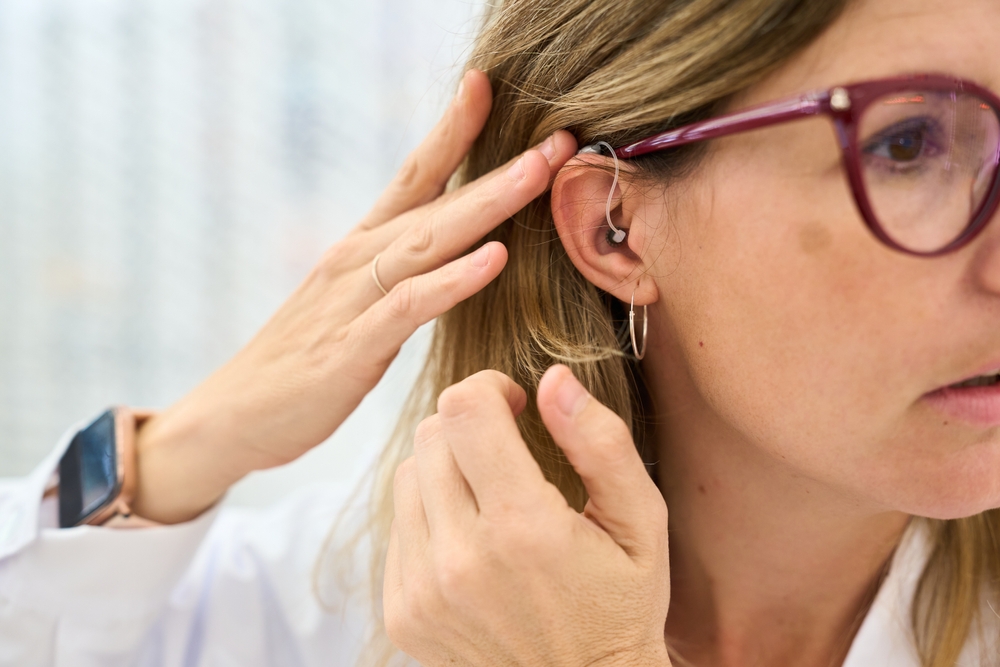
In addition to improving hearing and communication, hearing aids amplify background sound, so the loudness or prominence of the tinnitus is reduced. Simply taking the focus off the tinnitus means relief for many people. Hearing aids also reduce the stress associated with intensive listening by improving communication, which in turn help relieve tinnitus symptoms.

About BHI
Founded in 1973, BHI conducts research and engages in hearing health education with the goal of helping people with hearing loss benefit from proper treatment. For more information on hearing loss, visit www.betterhearing.org.


Hearing Loss Affects About 1 in 5 Americans, Researchers Say

Nov. 14, 2011. About one in five Americans ages 12 and older suffer from hearing loss that’s severe enough to make communication difficult, researchers from Johns Hopkins University found.

About 30 million Americans, or 13 percent of the population, have hearing loss in both ears, and 48 million, or 20 percent, in at least one ear, according to a study published today in the Archives of Internal Medicine. That exceeds previous estimates, which put the number of people with hearing loss at 21 million to 29 million, the researchers said.

The study also found that hearing loss doubled every decade of life. Deficient hearing has been linked to a greater risk of dementia, poor cognitive function and falling in the elderly, said lead study author Frank Lin, an assistant professor of otolaryngology and epidemiology at Johns Hopkins in Baltimore. The impact of hearing loss on the aging isn’t “inconsequential” and should be treated, he said.

“If you have poor hearing, your brain almost has to work harder to decode and process sound,” said Lin in a Nov. 11 telephone interview. “If you brain is having to reallocate resources to hearing, it probably comes at the expense of cognition or thinking ability.”

Researchers in the study used data from the National Health and Nutritional Examination Surveys from 2001 to 2008 for all participants ages 12 and older who had their hearing tested over that period. The survey is thought to be representative of the U.S. population.

Worse With Age
For those in their 40s, about 2.8 million suffer from hearing loss in both ears and 5.6 million have the condition in at least one ear. That number jumped to 8.8 million for people in their 70s who had hearing loss in both ears and 10.8 million for those who had hearing loss in at least one ear, the study showed.

Women and black people were less likely than other groups to suffer from hearing loss, the study found. Lin said estrogen may be protective of hearing and the same cells that make skin dark may also play a role in preventing hearing loss.

Today’s study “gives us the real scope of the problem for the first time and shows us how big of a problem hearing loss really is,” Lin said in a statement.

By Nicole Ostrow
Bloomberg from PRnewswire


Audio Recovery, Inc. Announces "Gift of Better Hearing"    

A community event offering the opportunity to receive a FREE pair of hearings aids and a life-time of follow-up hearing services


OKLAHOMA CITY, May 5, 2011 /PRNewswire/ -- Audio Recovery, Inc., an audiology and hearing aid practice, located on the Hough Ear Institute Campus, is pleased to announce "Gift of Better Hearing," a special event offering the chance for someone in the local community to receive a FREE pair of hearing aids and a life-time of follow-up services.

The event is expressed as a "Thank You" to the surrounding local area and also honors "May is Better Hearing" month, an annual time of year dedicated to raising awareness about hearing loss.  To participate, simply submit an essay of 1000 words or less nominating a person who could benefit from hearing aids and why you feel they deserve this gift.

Nominators should include their personal contact and address information as well as the nominee's name, address and phone number.  All nominees receive a complimentary hearing evaluation, and one blessed person will be selected to receive the gift of hearing devices and care based on the quality of the essay, degree of hearing loss and financial need.

Entries must be received by Tuesday, May 31, 2011 at:

Audio Recovery, Inc.

Hough Ear Institute Campus

3400 NW 56th St., Suite 100

Oklahoma City, OK  73112

or to email address:  mlewis@audiorecovery.com


For further information contact Monica Lewis at (405) 949-1906.

About Audio Recovery, Inc.

Audio Recovery, Inc. is proud to be a part of the Oklahoma City community and associated with the Hough Ear Institute, a non-profit research, educational and humanitarian organization. Their practice is led by well-trained and caring individuals with the desire to provide the best available solutions for their patients' hearing loss.  Audio Recovery is committed to excellence and wisdom in hearing loss care.

SOURCE Audio Recovery, Inc.

  • Tiny
  • Small
  • Big